
Home grown vegetables enhance your family’s nutrition while teaching the kids where fresh food really comes from. Not the store – or Amazon!
Plant a vegetable garden and begin your family’s adventure as home “farmers.” Here’s how to start…
Decide what you want to grow. Look through catalogs or visit your local garden center website. Find those seed packets you set aside and sort through what you might want to grow. Be sure to check the growing and planting dates for your region.
Determine which vegetables you will plant first. There are usually three categories of vegetables: – Early-spring veggies harvested before summer (some include spinach, peas, lettuce, etc.) – Early-spring-planted veggies that stay through summer such as cabbage, onions, parsley, potatoes, cilantro, dill, chard, carrots. – Summer-planted veggies like tomatoes, squash, peppers, cucumbers.
Make an outline of your garden plot. You don’t need a formal plan make a simple sketch of your garden layout, raised gardens, containers and any in-ground plantings. Since all vegetables have a best practice for how close together they can be, it’s important to understand how much space you will have for each crop to avoid crowding which can be a detriment to a good, healthy crop.
Harvest Cool Weather Crops. Before you begin to work the soil be sure that you have removed all of your winter vegetables, their roots and stalks. If you have more than your family can eat at harvest, pickling, preserving and freezing is an option for most winter vegetables. See the archive for how to store your harvest.
Plan for Summer. Consider the location of your summer crops before planting for spring. Don’t plant short root vegetables too close to plants that grow taller to avoid shading. Place the tallest vegetables such as tomatoes or anything grown on a trellis at the north end of each bed. This will ensure that the taller plants don’t block the sun from reaching shorter veggies.
Tips for Successful Crops
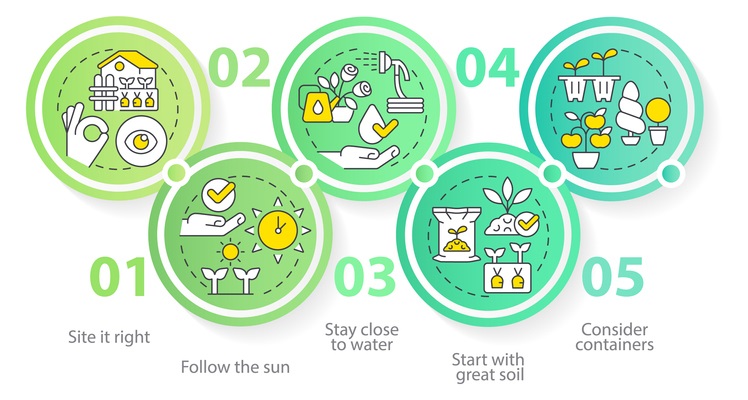
- Site it right: Where you put your vegetable patch may determine how successful it is. Things to consider are exposure to sun and wind and accessibility to water and convenience for you, especially if you have mobility issues. You can even mix vegetables into a flower garden or other landscaping as long as you take care not to use any chemical pesticides that may spread to your edibles.
- Follow the sun: Most vegetables require 8-10 hours of direct sunlight a day. If you have an area of your yard, or patio which faces south that would be an ideal spot. There are a few crops that don’t require as much sun, such as broccoli, lettuce, spinach and other greens. However, all vegetables need sunlight to thrive.
- Stay close to water: Be sure you have easy access to a hose or install a drip sprinkler system. Vegetables require an inch of water per week and up to about ½ inch more per week extra for every 10 degrees that the average temperature is above 60 degrees. Watering 3 times per week is ideal. When it gets very hot some vegetables may wilt but not to worry, they will perk back up when the sun goes down. Resist over-watering.
- Start with great soil: The best soil for growing vegetables should contain plenty of organic matter and a combination of nitrogen, phosphorous, and potassium. The good news is that there are plenty of pre-mixed soils available at your local garden and hardware stores. If you are replanting in an old patch be sure to mix in some new compost material as the nutrients may have been depleted by your last harvest.
- Consider containers: Containers are a great option for those who have limited space in their yard, or don’t have a yard at all. You can grow tomatoes in a hanging planter, zucchini in a large pot with a trellis, or multiple vegetables in one large pot. Just be sure to use a container less than 4 inches deep as the roots need space to grow. There are many advantages to container vegetables as they can be moved easily to address any issues with sun or water exposure.
However you choose to start your journey toward a more sustainable and healthy lifestyle by growing vegetables, there are endless resources such as the Old Farmers’ Almanac or your local nursery’s garden manager that can help you to be a successful “urban farmer”.
 gdba
gdba 