
Getting older is a blessing for certain but not everyone looks at the aging process the same way. While youth, looking and feeling “young” might be celebrated by some in our society the benefits of age include wisdom, experience, self confidence and freedom.

We do have to acknowledge that our bodily changes can be challenging as we age. Wrinkles, gray hair, arthritis, loss of strength and flexibility are naturally occurring physical changes but they don’t have to limit your joy or zest for life. By focusing on healthy, or healthier choices you can actually enjoy the process, increase longevity and, indeed, age well.
Our Aging Organs
Gradual changes are common and happen gradually as we age. From our brains taking a little longer to process input to our bones becoming less dense, these are normal and natural. Just as an infant grows into an adult, adults “grow” into being physically aged.
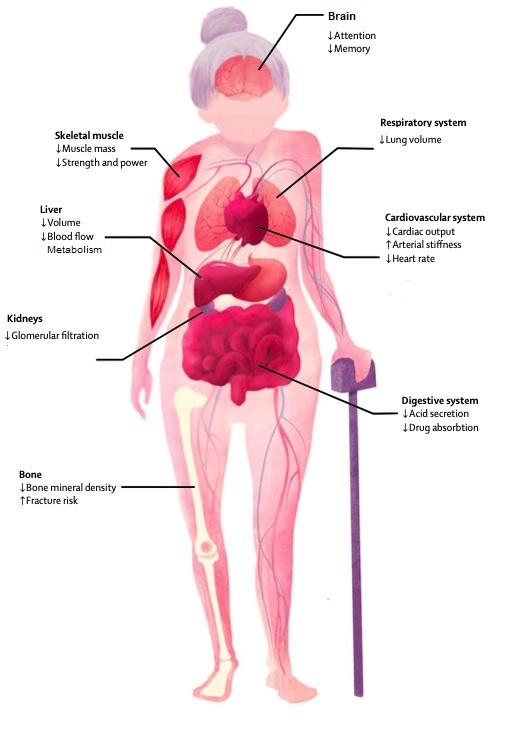
Let’s have a look at each change.
Brain: Certain parts of the brain shrink and communication between cells bay be less effective. While some changes due to substance abuse, injury or mood disorders may alter the brain, keeping your brain active; including learning new things, and managing stress can aid to your cognitive longevity.
Muscles: Mass may decrease from 3-8% after the age of 30 and higher after the age of 60. However, even very frail people over the age of 75 can gain significant muscle mass and strength through resistance training.
Respiratory system: Breathing exercises can actually increase your lung capacity. The American Lung Association has excellent tips on how your lungs change and what you can do to help your aging lungs.
Cardiovascular functions: Even in healthy individuals there is thickening and stiffening of the large arteries. This is why maintaining a good blood pressure through a healthy diet becomes even more important as we age. Aerobic capacity also declines but that makes exercise for at least 120 minutes per week even more important for heart health.
Metabolism & Digestive system: Our metabolism slows over time. This means we need less food energy than before. It also becomes more difficult to process some foods such as red meat, and simple carbohydrates. Some small changes to our diets can help alleviate problems, including issues that may arise in our excretory system; the kidneys and the liver.
Bone density: If you are over the age of 55 you should ask for a bone density screening. Not all physicians will include this as part of your regular physical. Since the bones mineral density depletes you may want/need to start taking a calcium supplement. Weight and resistance training and regular exercise also help to increase our bone density as we age.
Other changes: How long you sleep and the quality of your sleep may change. Become mindful of your sleep as a healthy habit: Sleeping Well. Changes in our eyesight occur and you will most likely need reading glasses around age 40. Our hearing may undergo some changes as well. Sexual functions may also undergo changes including desire and performance.
All of these are normal parts of aging. Your primary care physician will be able to provide you with medical help for any of the above issues. But for the most part how you age is really up to you. There are a number of things you can do to for your body and your mind Age Well.
Tips for Aging Well
5 quick ways to start aging well:
- Be active more often – Exercise
- Improve your diet – Eat the Rainbow
- Get quality sleep – Sleeping Well
- Stop smoking – American Lung Assn. Smoking Cessation
- Challenge your brain – Coming Soon
Let’s explore in more detail some other Tips for Aging Well
 gdba
gdba 